
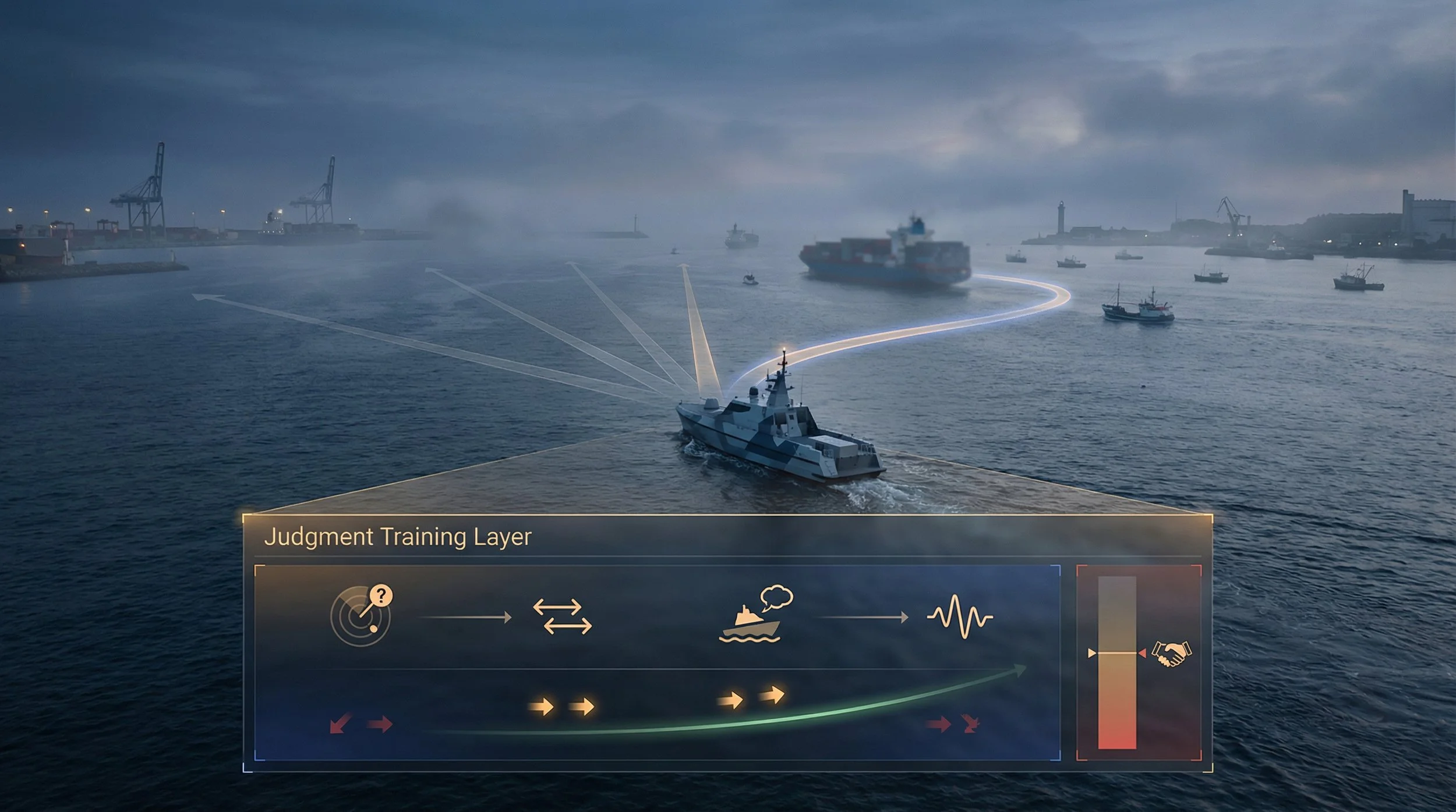
Autonomy needs judgment — not just detection.
Autonomous vessels operate in crowded, regulated waters — but can fail when uncertainty appears.
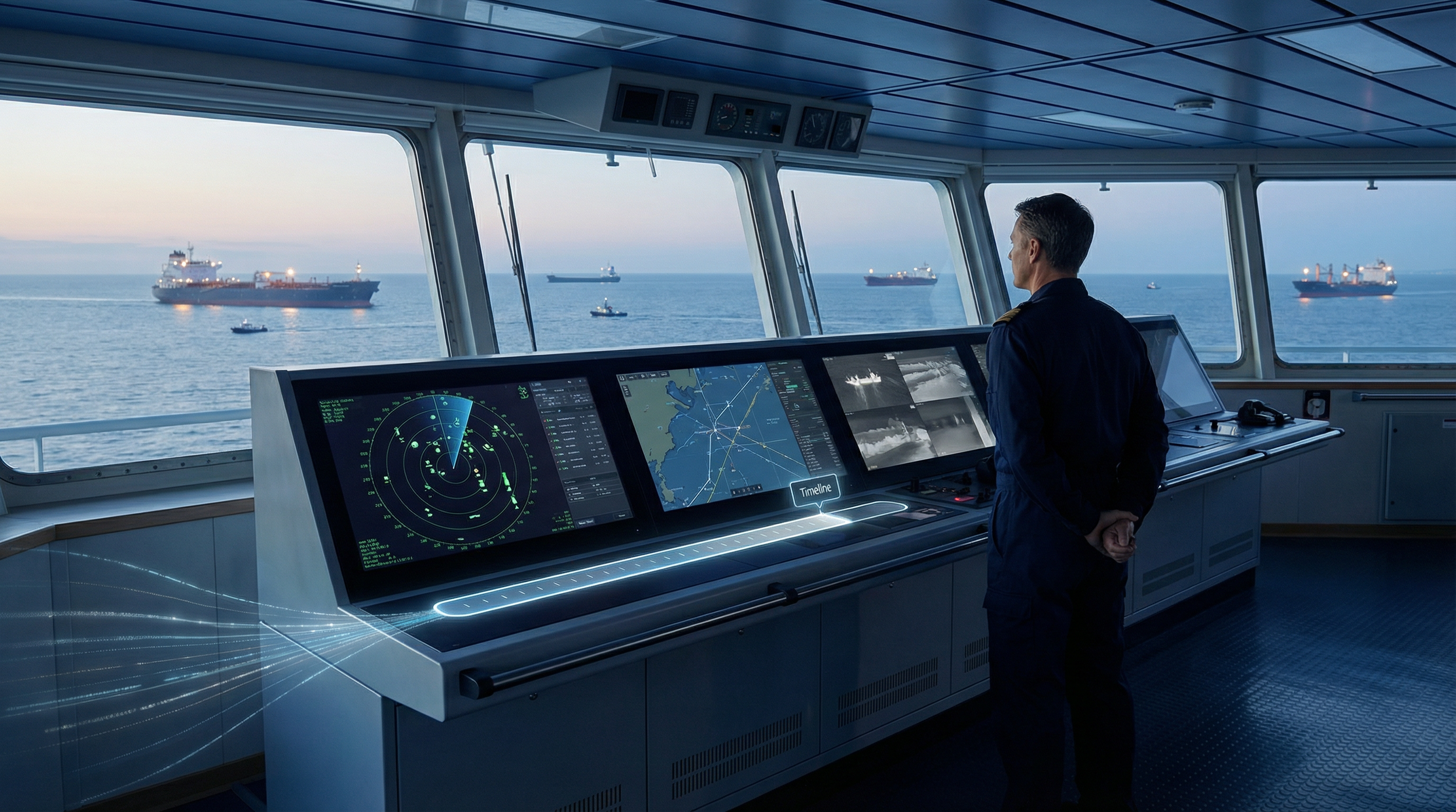
TrueWake trains maritime autonomy systems on judgment, escalation, and human handoff, not just perception or navigation accuracy.
We help teams prove that their systems behave reasonably, proportionally, and defensibly under real-world ambiguity — before pilots, incidents, or regulators force the issue.
We train autonomy on judgment.
TrueWake provides a human judgment layer for maritime autonomy — evaluating and shaping how systems escalate, explain, and hand off under uncertainty.
What We Evaluate
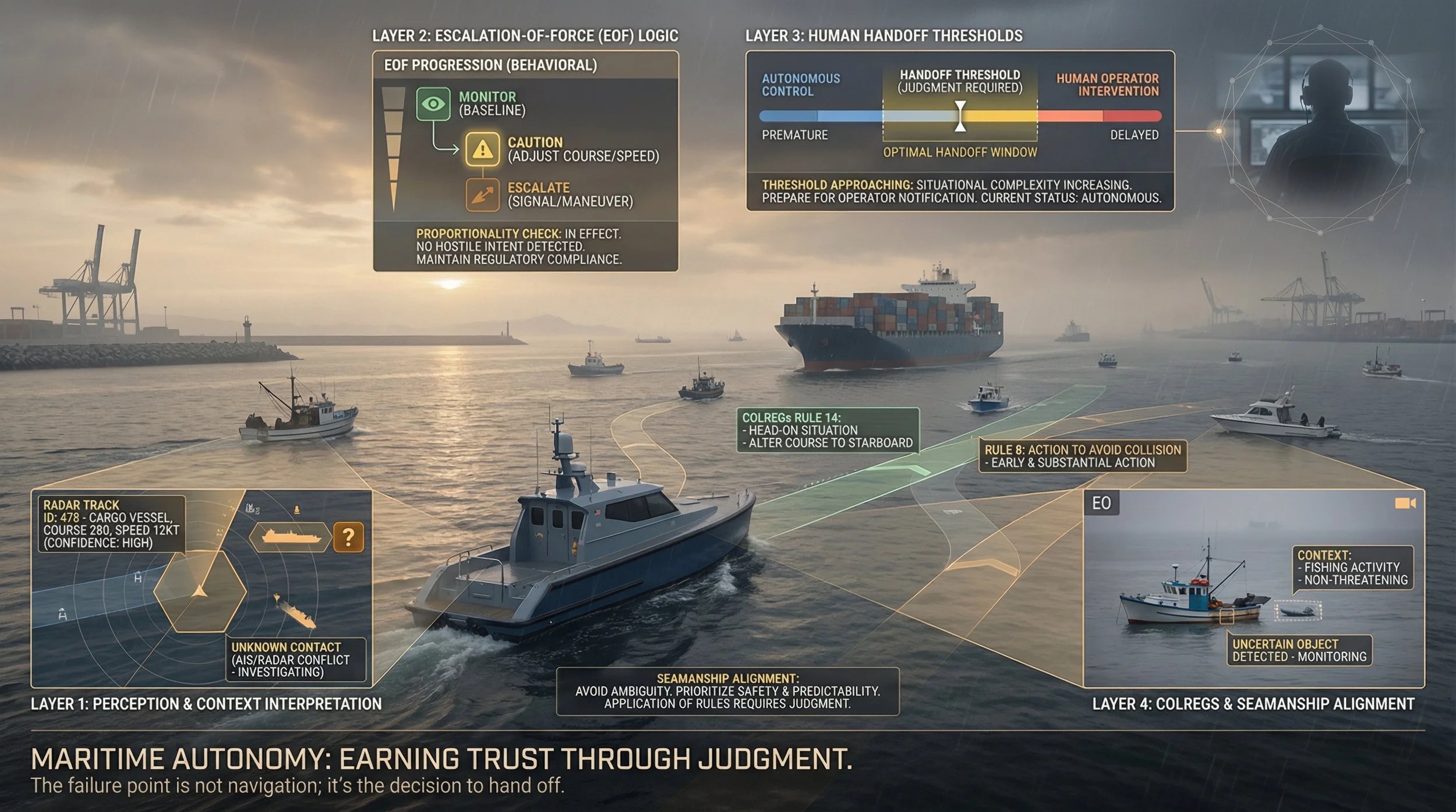
Decision-making where autonomy breaks down
TrueWake evaluates and trains systems across:
Perception & Context Interpretation
How vessels, sensors, and uncertainty are interpreted in real conditions
Escalation-of-Force (EOF) Logic
Whether responses to ambiguity are proportional, progressive, and explainable
Human Handoff Thresholds
When and how autonomy notifies or re-engages operators
COLREGs & Seamanship Alignment
Mapping decisions to the standards regulators, insurers, and courts apply
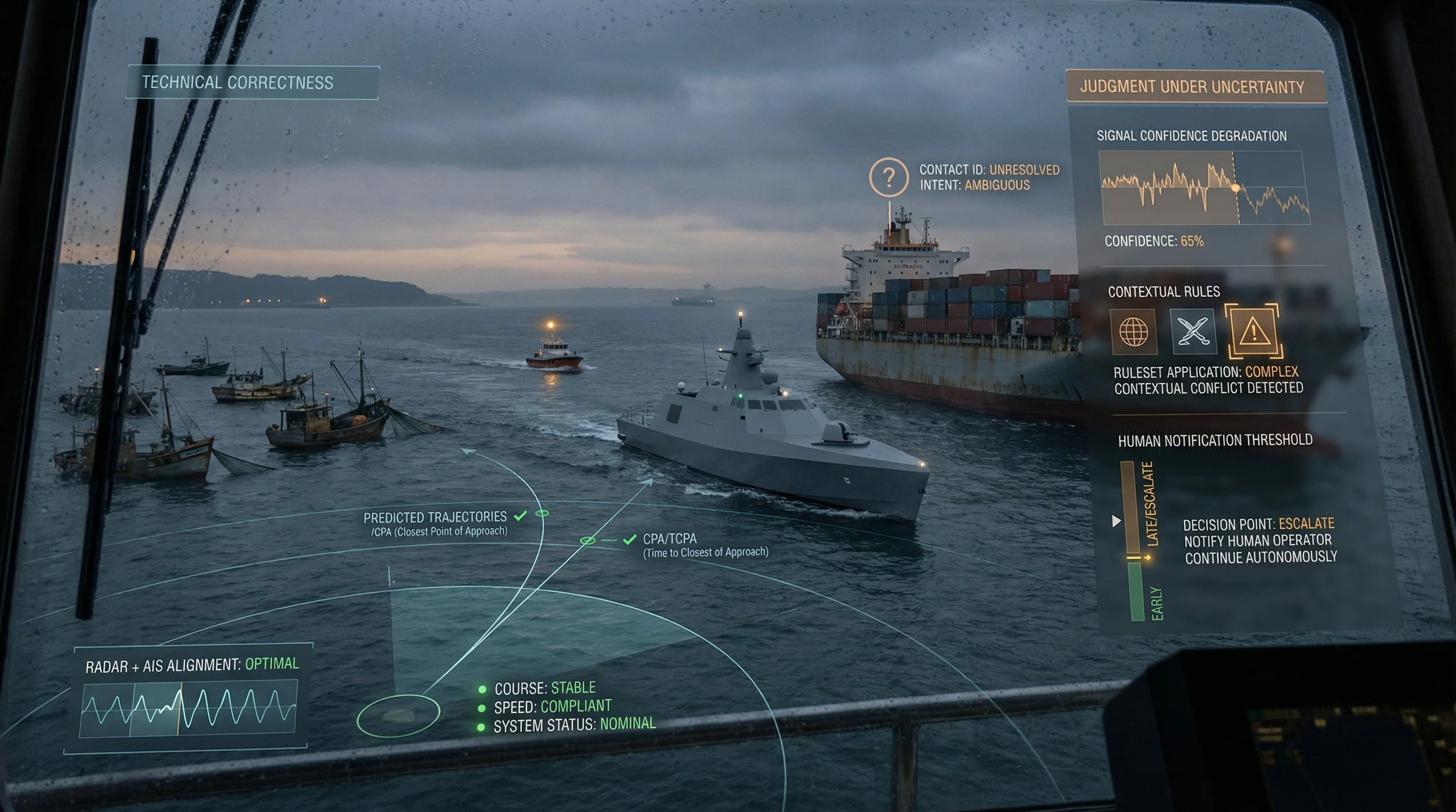
Systems learn how to behave — not just how to detect.
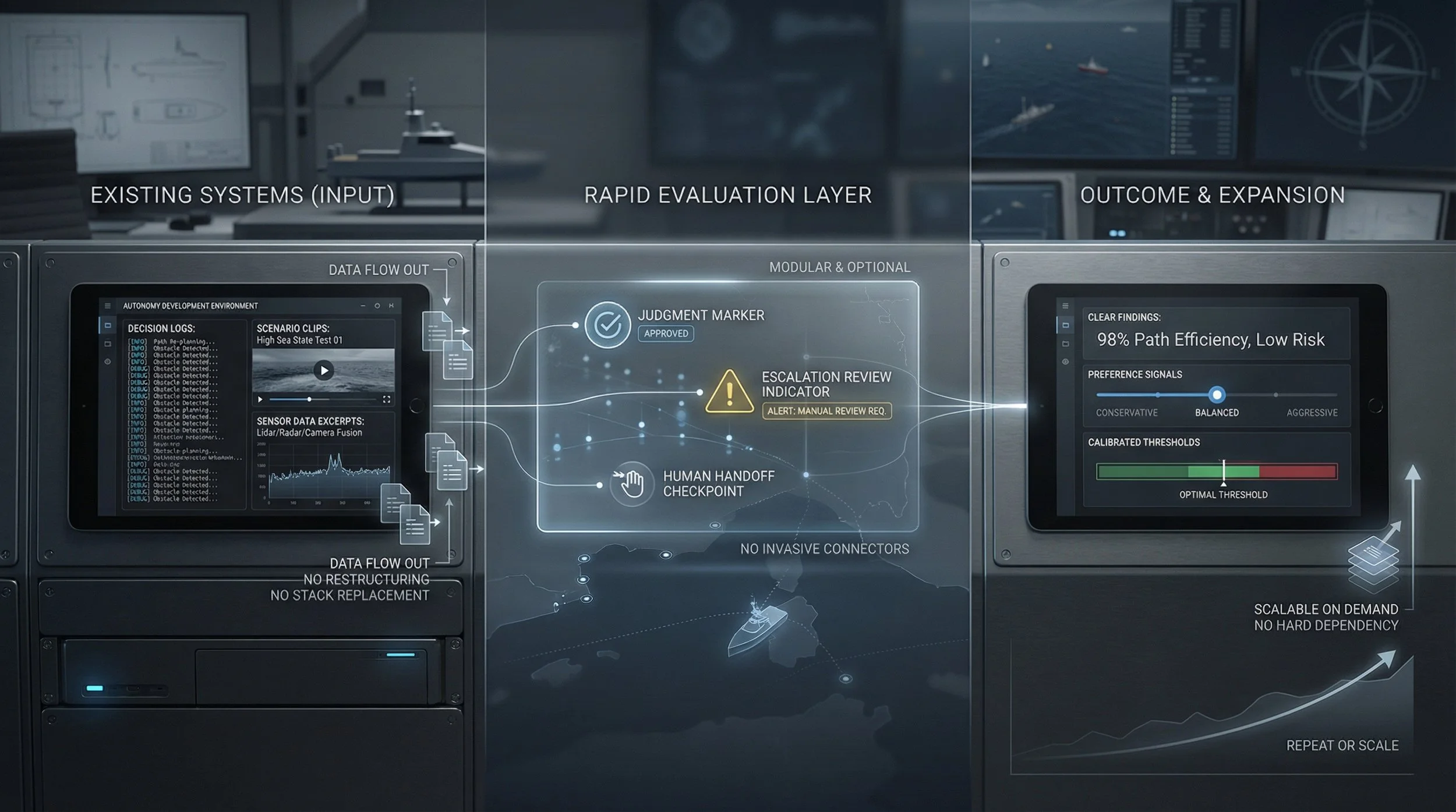
TrueWake creates high-signal training data grounded in real operational judgment:
Context-rich perception labels
RLHF / preference data for behavior and escalation
Severity-ranked failure modes and preferred alternatives
Calibrated thresholds engineers can adopt directly
This is not a model rewrite. It’s judgment calibration — the layer autonomy systems are missing.